It's All About the Execution
Yesterday I wrote about my disappointment in some of Mackenzie & Ebert's recent shaping at Royal Birkdale. Basically, I find a lot of the new and renovated green complexes pretty artificial-looking.
This, as I understand it, is a long-standing issue at Birkdale. The older greens, mostly built by Martin Hawtree in the 90s, are not especially well tied in to the surrounding dunescape, either. Many of them have the kind of copy-and-paste runoffs/collection areas that one sees in a lot of late-20th-century golf architecture. The left edge of the first green is a good example.

(Photo credit: Cookie Jar Golf)
The recent work has just exacerbated this issue in a few places by making the runoffs bigger and more visually prominent. See the right side of the 15th green.
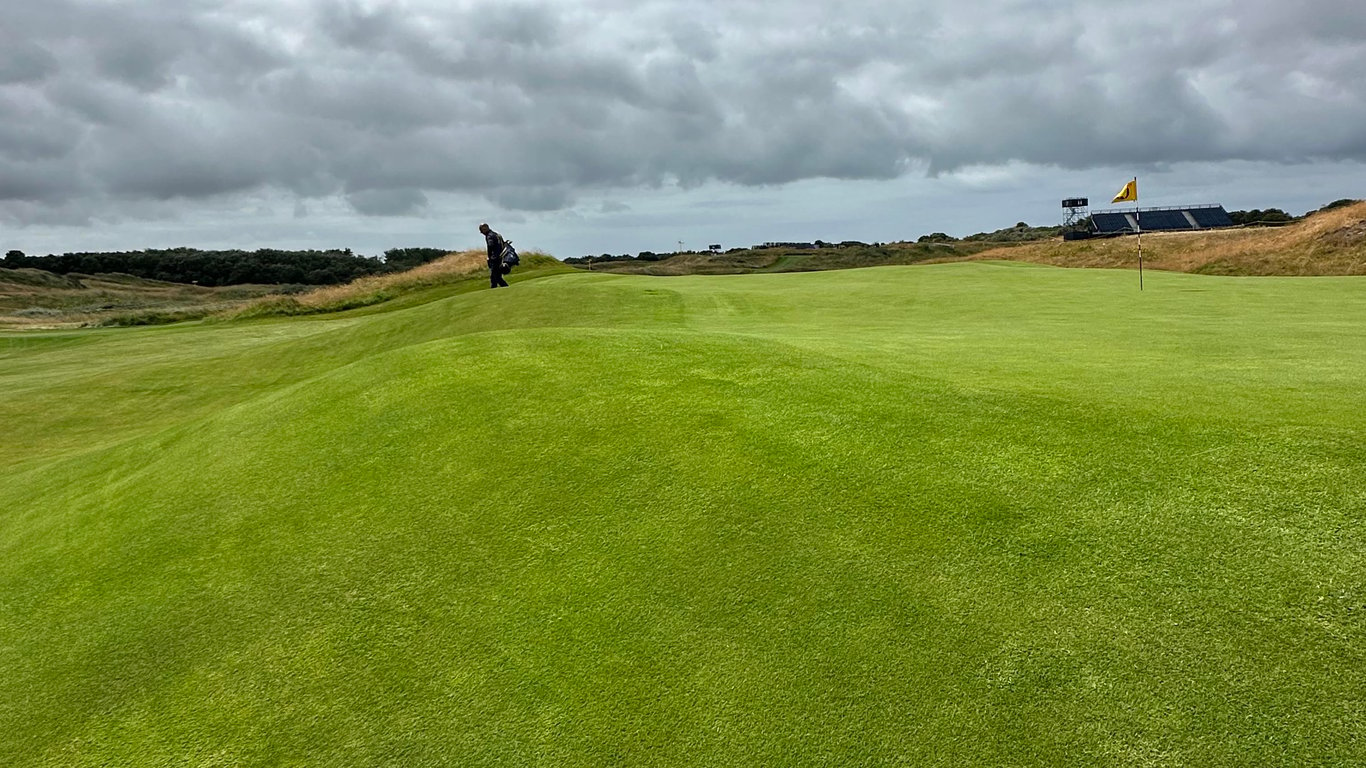
(Photo credit: Joseph LaMagna)
But I should clarify that I don't object to runoffs or artificially pushed-up greens in general. I think this style of green construction works just fine when it's executed skillfully.
The famous crowned greens at Pinehurst No. 2, for instance, never feel repetitive or overworked. Each is different, and each flows into the surrounding terrain in a unique way. They don't always strike the eye as natural, but because of their variety and irregularity, they're always exciting to look at and reckon with. (And yes, they are not original to Donald Ross's 1936 greens renovation! They're awesome nonetheless.)
(Photo credit: Fried Egg Golf)
Questions of shaping and aesthetics are tricky. So much about the topic is subjective, and you can definitely starting sounding insane (or, worse, pretentious) if you dwell on it too long. But naturalness, beauty, and visual harmony are huge sources of pleasure in golf. Here's how Alister MacKenzie put it:
"It may at first appear unreasonable that the question of aesthetics should enter into golf course design. However, on deeper analysis it becomes clear that the great courses, and in detail all the famous holes and greens, are fascinating to the golfer by reason of their shape, their situation, and the character of their modeling. When these elements obey the fundamental laws of balance, of harmony and fine proportion, they give rise to what we call beauty. This excellence of design is more felt than fully realized by the players, but nevertheless it is constantly exercising a subconscious influence upon him and in course of time he grows to admire such a course as all works of beauty must be eventually felt and admired."